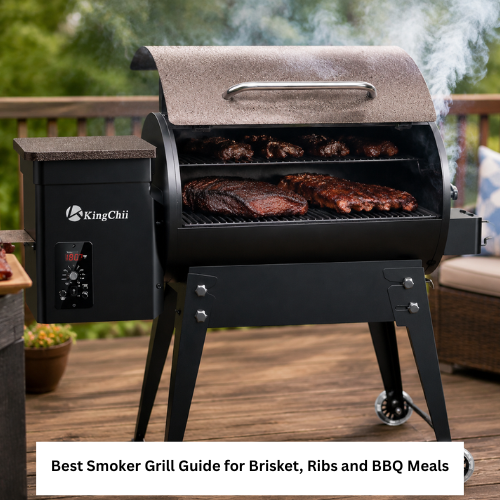
This best smoker grill guide helps buyers compare fuel type, cooking chamber size, airflow, fire management, cleanup, and long cooking reliability. A smoker that works well for ribs may not have enough grate width for a full brisket, while a large offset smoker may require more fuel and attention than a family wants to manage.
The right BBQ smoker should fit the food you cook, your experience level, outdoor space, available power or fuel, and the amount of fire management you enjoy.
How to Choose the Best Smoker Grill
The best smoker grill is not always the largest or most expensive option. It should maintain usable cooking heat, hold the foods you prepare, allow safe access to fuel, manage grease correctly, and have replacement parts available.
| Smoker type | Main advantage | Main limitation | What to verify |
| Pellet smoker | Controller based temperature management | Requires electricity and dry pellets | Hopper, controller, probes, and ash access |
| Offset smoker | Traditional fire management and strong smoke potential | Requires regular airflow and fuel adjustment | Steel quality, firebox fit, dampers, and chamber size |
| Charcoal smoker | Flexible charcoal and wood cooking | Requires practice controlling vents and fuel | Charcoal access, ash removal, and vent design |
| Vertical smoker | Uses a smaller ground footprint | Rack width may limit large cuts | Door access, rack spacing, and water pan setup |
Match the Smoker to the Food
Brisket
A brisket smoker needs enough grate width and lid clearance to hold the meat without pressing it against walls or hot spots.
Check whether a full brisket fits on the main grate. Product images can make the chamber look larger than the actual usable area.
A long brisket cook also needs reliable fuel access. Adding charcoal or wood should not require removing the meat whenever possible.
Ribs
A rib smoker needs enough grate length for full racks or enough height for a compatible rib rack.
Measure the usable cooking width. Check whether upper racks reduce clearance or whether ribs placed near the firebox receive too much direct heat.
Pork shoulder and larger roasts
These cuts need vertical clearance as well as grate area. Confirm that the lid closes without touching the food or thermometer probe.
Chicken and smaller foods
Chicken can release more grease than some lean cuts. Check grease drainage and clean the smoker after cooking.
If cooking several foods together, confirm that drippings will not contaminate food below and that every item can reach a safe internal temperature.
Offset Smoker Buying Guidance
An offset smoker uses a separate firebox connected to the main cooking chamber. Heat and smoke move from the firebox through the chamber and out of the exhaust.
This design allows traditional fire management, but it requires attention.
Buyers should inspect:
- Firebox door fit
- Cooking chamber lid fit
- Damper movement
- Exhaust position
- Grate strength
- Fire grate access
- Ash removal
- Wheel stability
- Handle protection
- Metal finish
- Replacement thermometer availability
The Royal Gourmet CC1830S offset smoker is one product example for buyers comparing a charcoal firebox, main cooking chamber, outdoor footprint, and cover needs.
Do not assume an offset smoker will hold a steady temperature without adjustment. Fuel size, wood moisture, airflow, weather, and firebox management all affect the cook.
Pellet Smoker Buying Guidance
A pellet smoker can reduce manual fire management by using a controller, fan, auger, and burn pot.
It may suit buyers who want to smoke overnight or manage longer cooks with fewer fuel adjustments. It still requires supervision, dry pellets, electricity, grease cleaning, and ash removal.
The Traeger Pro Series 575 pellet smoker may suit cooks who prefer controller based heat management, but current features and included parts should be verified before buying.
The Louisiana Grills Estate 860C pellet smoker can be reviewed by shoppers who want a cart style pellet setup, but all dimensions, electrical needs, and delivery details require verification.
Check whether the main grate can hold a full brisket. A large total cooking area may include narrow upper racks that are better for smaller foods.
Charcoal Smoker Buying Guidance
A charcoal smoker uses charcoal as the main heat source and may use wood chunks for added smoke.
It can provide strong BBQ flavor and does not normally need an electrical outlet, but vent control and fuel management require practice.
The Royal Gourmet CD1824EN charcoal smoker gives buyers another charcoal option to compare for grate layout, side tables, vent control, and storage space.
Check how new charcoal is added during a long cook. Lifting hot grates or moving food can be inconvenient and unsafe.
Also check ash access. Ash buildup can restrict airflow and make temperature control difficult.
Cooking Capacity and Smoker Size
Do not rely only on total square inches. Ask how the cooking area is divided.
Measure:
- Main grate width
- Main grate depth
- Distance from grate to lid
- Upper rack clearance
- Door opening
- Firebox opening
- Overall outdoor footprint
- Lid and door swing
- Distance between shelves
- Storage height with the cover fitted
For brisket, compare the flat length and width with the usable main grate.
For ribs, estimate how many full racks fit flat. If using a rib rack, check lid clearance and spacing for airflow.
A very large smoker can consume more fuel and take longer to heat. Buy for normal cooking needs rather than rare events.
Temperature Control and Airflow
Offset smoker control
Control heat by managing the fire size, intake damper, exhaust, fuel condition, and cooking chamber position.
Keep the exhaust open according to the manufacturer guidance. Restricting exhaust excessively can create dirty combustion and bitter smoke.
Small clean fires are often easier to manage than a firebox packed with fuel.
Charcoal smoker control
Air enters through lower vents and exits through upper vents. Opening intake vents generally increases combustion, while closing them reduces airflow.
Make small changes and allow time for the smoker to respond.
Pellet smoker control
The controller adjusts pellet delivery and fan operation. Owners should keep the burn pot, temperature sensor, and airflow path clean.
Cold weather and wind can increase pellet use and cooking time.
Thermometers and Probe Placement
A lid thermometer may show the temperature near the lid rather than at the food grate.
Use a suitable grate probe near the food without touching metal. Place a separate food probe in the thickest part of the meat while avoiding large bones and fat pockets.
Probe cables should pass through a designed port when available. Closing a heavy lid directly on the cable can damage it.
Check probe accuracy if readings appear inconsistent.
Smoker Setup and Seasoning
Follow the model specific manual before cooking food.
Setup may include:
- Completing assembly
- Tightening handles and wheels
- Installing grates and heat plates
- Cleaning manufacturing residue
- Performing an empty burn
- Applying oil where instructed
- Checking thermometer operation
- Confirming vent movement
- Inspecting grease drainage
- Testing fuel access
- Allowing the smoker to cool safely
Do not apply coatings, sealants, or paint inside the cooking chamber unless the manufacturer specifically approves them.
Safe Outdoor Smoker Use
Every smoker must be used outdoors in a ventilated area.
Never operate a smoker:
- Inside a home
- In a garage
- Under an enclosed porch
- In a tent
- Inside a vehicle
- Near dry grass
- Against a combustible wall
- Beneath a low combustible roof
- Where children or pets can contact hot surfaces
Follow the stated clearance requirements for the specific smoker.
Use heat resistant gloves suited to the task. Keep long tools available so hands remain away from hot grates and firebox openings.
Do not use gasoline, alcohol, or other unapproved flammable liquids to start a fire.
Keep ash contained until it is completely cool. Dispose of it according to local fire safety rules.
Common Smoker Buying Mistakes
Common errors include:
- Buying without measuring the cooking chamber
- Using total cooking area instead of main grate dimensions
- Choosing an offset smoker without wanting fire management
- Buying a pellet smoker without outdoor electricity
- Ignoring charcoal and ash access
- Choosing a smoker too large for normal meals
- Overlooking grease drainage
- Assuming every model includes probes or a cover
- Ignoring replacement grate and thermometer availability
- Failing to check delivery weight
- Discarding the package before inspecting parts
- Ignoring warranty exclusions
- Using indoor storage without allowing the smoker to cool
The Royal Gourmet charcoal offset smoker listing provides an external comparison point for buyers checking chamber design, firebox access, outdoor size, package contents, and seller terms.
Conclusion
The best smoker grill for your backyard should match the food you cook, the fuel you prefer, the time you can spend managing heat, and the space available. Offset smokers reward hands on fire control, pellet smokers simplify fuel feeding, and charcoal smokers offer flexible traditional cooking. BBQ grills on sale helps shoppers compare relevant smoker products while keeping safety, capacity, maintenance, and replacement parts in focus.
FAQ
Is a pellet smoker good for brisket?
Yes, a suitable pellet smoker can provide steady indirect heat. Check the main grate size, hopper capacity, probe support, and pellet storage.
Is an offset smoker difficult to use?
It requires more fire and airflow management than many controller based smokers. Practice is normally needed for stable heat.
What size smoker is needed for ribs?
Measure the usable grate width and compare it with full rib racks. A rib rack may increase capacity if there is enough lid clearance.
Can a charcoal smoker be used without wood?
Yes. Charcoal supplies heat, while approved wood chunks can be added for more smoke flavor.
How often should a smoker be cleaned?
Clean grease, ash, and food residue regularly according to the manual. Long and fatty cooks may require more frequent cleaning.
