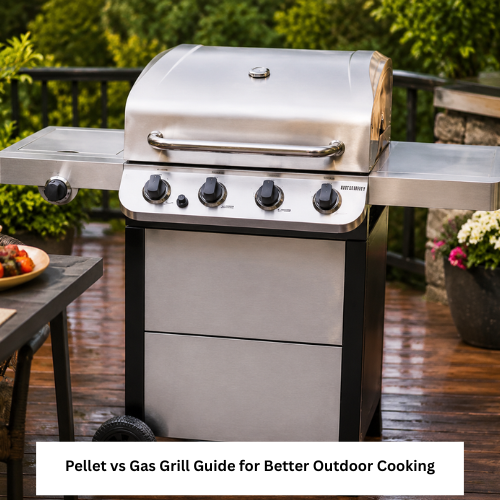
This pellet vs gas grill comparison helps buyers decide whether smoke focused cooking or quick burner control better matches their routine. Both grill types can prepare everyday meals and larger backyard BBQ menus, but they differ in startup, fuel, flavor, temperature control, cleaning, power requirements, and fire management.
A pellet grill is generally designed around indirect wood pellet cooking and controlled heat. A gas grill uses propane or natural gas burners that can heat quickly and provide separate cooking zones.
Neither option is automatically better. The right grill is the one that fits the food you cook, the time you have, the fuel available at your home, and the maintenance you are prepared to complete.
Pellet vs Gas Grill Comparison for Real Buyers
The pellet vs gas grill decision becomes easier when buyers compare actual cooking habits rather than focusing only on brand names or advertised features.
| Comparison point | Pellet grill | Gas grill |
| Startup | Requires electrical startup and preheating | Usually quick burner ignition |
| Fuel | Cooking pellets and electricity | Propane tank or natural gas line |
| Smoke flavor | Wood smoke is part of normal cooking | Lighter unless smoke accessories are used |
| Low and slow cooking | Common strength | Possible with indirect burner setup |
| Direct high heat | Varies by design | Usually a common strength |
| Temperature control | Controller manages pellet feed and airflow | Burner knobs control gas flow |
Choose a Pellet Grill When
A pellet grill may fit your cooking style when you regularly prepare foods that benefit from steady indirect heat.
It can be useful for:
- Brisket
- Ribs
- Pork shoulder
- Whole chicken
- Turkey
- Smoked vegetables
- Baked dishes
- Longer weekend cooks
The controller can reduce the need for constant manual fuel adjustment. However, owners must still monitor the cook, food temperature, pellet supply, grease, and outdoor conditions.
A pellet grill also needs a safe electrical connection and dry pellet storage.
The Traeger Pro Series 780 pellet grill gives buyers one product page for comparing cooking space, controller design, probe support, electrical needs, and outdoor footprint.
Choose a Gas Grill When
A gas grill may be more practical when quick setup and direct heat are the main priorities.
It can be useful for:
- Burgers
- Hot dogs
- Steaks
- Chops
- Fish
- Vegetables
- Short weekday meals
- Multi zone cooking
Separate burners make it easier to create hot and cooler areas. This can help when cooking different foods at the same time.
A propane grill needs a correctly connected and maintained cylinder. A natural gas grill needs the correct gas supply and professional installation where required.
The Weber Spirit II E 310 propane grill can be reviewed by buyers comparing a cart style gas grill, but fuel type, dimensions, package contents, and current specifications should be verified before buying.
The Char Broil Performance four burner gas grill gives shoppers another propane option for comparing burner layout, cooking space, shelves, grease access, and storage needs.
Consider a Hybrid Grill When
A hybrid grill may appeal to buyers who want more than one fuel style but do not have space for two separate cookers.
The Char Broil Gas2Coal three burner hybrid grill offers one product example for buyers comparing gas convenience with charcoal cooking, but conversion steps, dimensions, clearances, and included parts must be verified before buying.
A hybrid design can involve more parts and cleaning. Check whether the cooking surface is divided between fuels or converted from one mode to another.
Also confirm whether both modes can be used at the same time. Do not assume this unless the manufacturer states it clearly.
Flavor Differences
Pellet grills burn compressed cooking pellets and normally create a wood smoke profile. The strength of that flavor depends on temperature, pellet type, cooking time, airflow, and the food.
Gas grills provide a cleaner and lighter combustion flavor. Browning, seasoning, marinades, fat dripping onto heat shields, and direct searing can still create strong BBQ flavor.
Buyers should not assume that a pellet grill always creates heavy smoke or that a gas grill cannot produce smoky food. Cooking method and accessories influence the result.
If smoke flavor is a high priority, compare the amount of time you plan to spend smoking against the number of quick grilling sessions you expect each week.
Space and Installation Requirements
Measure the grill with lids, side shelves, doors, and storage areas fully open.
Check:
- Overall width and depth
- Lid opening clearance
- Side shelf space
- Rear heat clearance
- Distance from walls and railings
- Stable floor area
- Propane cylinder location
- Natural gas connection location
- Electrical outlet location
- Cover dimensions
- Safe walking space around the cooker
Never use a pellet or gas grill indoors, in a garage, inside a tent, or in another enclosed area. Carbon monoxide and fire hazards remain present even when doors or windows are open.
Follow the exact manufacturer clearance requirements instead of using a general estimate.
Gas Grill Safety Checks
Before each gas grill use:
- Inspect the hose and regulator.
- Confirm connections are secure.
- Keep the lid open during ignition when the manual requires it.
- Test for leaks using the approved method.
- Never test for gas leaks with a flame.
- Turn off the burners and fuel supply after cooking.
- Keep grease trays clean.
- Do not move a hot grill.
- Replace damaged hoses or regulators with compatible parts.
- Stop using the grill if you smell gas and follow the emergency instructions.
Natural gas connections should be installed and inspected according to local rules.
Pellet Grill Safety Checks
Before pellet cooking:
- Inspect the power cord.
- Confirm the hopper contains dry cooking pellets.
- Check that the burn pot is not overfilled.
- Clean accumulated grease and ash.
- Follow the correct startup sequence.
- Keep hands away from the auger.
- Use the controller shutdown process.
- Disconnect power before approved maintenance.
- Never vacuum warm ash.
- Stop using the grill if electrical parts become wet or damaged.
Both grill types need adult supervision whenever they are operating.
Cooking Speed and Convenience
Gas usually suits people who want to light the grill, preheat, cook, and shut down within a shorter period.
Pellet grills may take longer to start and complete their shutdown cycle. The reward is steady indirect cooking with wood fuel.
The pellet vs gas grill choice often depends on whether you value faster weekday use or longer smoke focused sessions.
Some households use a gas grill for quick meals and a smoker for weekend cooking. Buyers with enough space and budget may prefer two specialized units rather than one compromise.
Cleaning Requirements
Pellet grill cleaning
Pellet grill maintenance can include:
- Brushing grates
- Emptying the grease bucket
- Cleaning the drip tray
- Removing ash
- Inspecting the burn pot
- Cleaning the temperature sensor
- Checking the chimney
- Protecting the hopper from moisture
Gas grill cleaning
Gas grill maintenance can include:
- Brushing grates
- Cleaning grease trays
- Inspecting burner ports
- Cleaning heat shields
- Checking the igniter
- Inspecting hoses and regulators
- Removing food debris from the firebox
Follow the manual before removing burners, controller parts, augers, or electrical components.
Cost and Long Term Ownership
The purchase price is only part of the total cost.
Pellet grill ownership can include pellets, electricity, covers, probes, igniters, controllers, fans, and auger parts.
Gas grill ownership can include propane refills, gas connections, regulators, hoses, burners, ignition parts, flavorizer bars, and grease trays.
Check whether replacement parts remain available for the model. A low initial price may not be useful if essential parts are difficult to replace.
Review warranty coverage carefully. Different components may have different coverage periods or exclusions.
For an external gas option, buyers can review the Weber Spirit two burner propane grill listing and then verify the current fuel type, dimensions, package details, warranty, and return terms.
Conclusion
The pellet vs gas grill decision should be based on cooking time, preferred BBQ flavor, fuel access, outdoor space, temperature control, cleanup, and ownership cost. Pellet grills generally suit smoke focused and low and slow cooking, while gas grills usually suit quick ignition and flexible burner zones. BBQ grills on sale provides relevant options for shoppers comparing both cooking styles.
FAQ
Which grill is easier for beginners?
A gas grill is often simpler for quick direct grilling. A pellet grill can simplify low and slow heat control but requires electrical and pellet system care.
Does a pellet grill taste better than gas?
Taste is personal. Pellet grills usually provide more wood smoke, while gas grills offer cleaner heat and strong browning.
Is a gas grill cheaper to operate?
Operating cost depends on local fuel prices, cooking duration, grill efficiency, and maintenance. Compare costs in your area.
Can a pellet grill replace a gas grill?
It can for many foods, but buyers who prioritize fast startup and direct high heat should verify the pellet grill has suitable features.
Can a gas grill smoke brisket?
Yes, some gas grills can use indirect heat and an approved smoke accessory. Temperature stability and cooking space must be checked.
