A grill size guide helps you avoid buying a grill that is too small for family meals or too large for your patio. The right grill size depends on your cooking area, family size, storage space, burner count, and how often you host guests.
Before buying, think about the meals you cook most often. A small patio grill may suit weekday dinners, while a larger BBQ grill may be better for cookouts, parties, and meal prep.
Grill Size Guide for Different Family Needs
This grill size guide is not only about the number of burners. You should also check cooking surface, warming rack space, lid height, side shelves, storage footprint, and how much clearance the grill needs outdoors.
If a product page does not clearly confirm cooking area, assembled size, shelf width, or fuel setup, verify before buying.
Small Patio Grill vs Large BBQ Grill
A small patio grill is useful for apartments, compact decks, campers, and couples who cook smaller meals. It is usually easier to move, store, and clean.
A large BBQ grill is better for bigger families, backyard parties, and buyers who cook multiple foods at the same time. Larger grills need more floor space, more cleaning time, and more fuel.
2 Burner Gas Grill vs 4 Burner Gas Grill
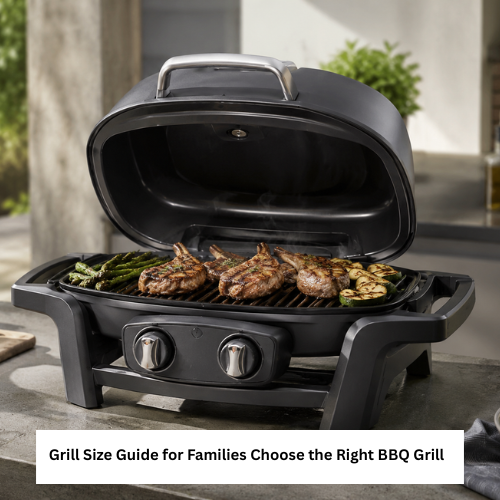
A 2 burner gas grill may be enough for couples, small families, or buyers with limited outdoor space. It can still handle basic meals if the cooking area fits your needs.
A 4 burner gas grill gives more cooking zones and space for larger meals. It may be better for families who cook meats, vegetables, and sides at the same time.
| Buyer Type | Better Grill Size | Why It Fits | What to Verify |
| Single user or couple | Small grill or 2 burner grill | Easier storage and faster cleanup | Cooking area and patio clearance |
| Small family | 2 burner or compact 3 burner | Enough for regular meals | Burner spacing and shelf size |
| Medium family | 3 or 4 burner grill | More cooking flexibility | Fuel use, assembled dimensions |
| Frequent party host | Large BBQ grill | More food at one time | Delivery, assembly, cleaning access |
| Camper or tailgater | Portable grill | Easy movement and storage | Weight, folding legs, fuel type |
Outdoor Cooking Size and Space Checks
Measure the area where the grill will sit, including lid opening space, side shelves, walking space, and safe clearance from walls or railings. Do not measure only the grill body.
Also think about storage. A grill cover, propane tank, tools, cleaning brush, and extra fuel may need space nearby.
For families who cook outside often, a family BBQ grill should provide enough cooking room without blocking walkways or making the patio unsafe.
Burner Count and Cooking Area
Burner count can help with heat zones, but it does not tell the full story. A wide 2 burner grill may feel more useful than a narrow grill with more controls, depending on layout.
Check the actual cooking area, grate shape, warming rack, and lid clearance. If you cook whole vegetables, large cuts, or multiple trays, verify space before buying.
You can compare 2-burner propane grill examples to understand how compact family grills are commonly designed.
Accessories That Affect Grill Size
Accessories can change how much space you need. Side shelves, grill carts, covers, mats, and storage racks can make the setup wider than expected.
Use grill covers that match the grill dimensions, and verify size compatibility before buying because covers are not universal.
Setup and Safety Tips
Keep the grill outdoors on a flat and stable surface. Leave safe clearance around the grill and avoid placing it near walls, dry plants, outdoor furniture, or low structures.
Check wheel locks, leg stability, shelf support, fuel hose placement, and grease tray access. Do not place a hot grill in storage or cover it before it cools fully.
Common Sizing Mistakes
Do not buy based only on burner count. Check real cooking area and the size of food you usually prepare.
Do not forget side shelves and lid clearance. A grill may fit when closed but become awkward when opened or when shelves are extended.
A practical grill size guide should help you match the grill to your family, not just choose the biggest model available.
Troubleshooting Grill Size Problems
If the grill feels too small, use cooking zones and batch cooking, but avoid overcrowding the grate. Crowded food can cook unevenly.
If the grill feels too large, use only the burners you need when the model allows it, and keep the unused area clean. Always follow the product manual for proper operation.
Practical Buying Checklist
- Measure your patio, deck, or backyard space.
- Check total grill width with shelves open.
- Verify cooking area and warming rack space.
- Match burner count to family size and cooking style.
- Check fuel compatibility and storage needs.
- Review safety clearance from walls and railings.
- Check material, wheels, lid, shelves, and grate quality.
- Confirm setup and assembly requirements.
- Review cleaning access and maintenance parts.
- Check warranty, return policy, delivery, and support.
- Verify before buying if dimensions or cooking area are unclear.
Conclusion
A grill size guide makes it easier to choose a grill that fits your family, outdoor space, and cooking habits. Measure first, compare burner count with cooking area, check storage and safety clearance, and verify all size details before buying.
FAQ
What grill size is best for a family?
A small family may do well with a 2 burner or compact 3 burner grill. Larger families may prefer 4 burners or more.
Is a 2 burner gas grill enough?
Yes, it can be enough for couples or small families if the cooking area fits your meals.
Should I buy a large BBQ grill?
Buy a large grill if you host often or cook many foods at once. Make sure you have enough safe outdoor space.
How do I measure space for a grill?
Measure width, depth, lid opening room, side shelf space, walking space, and clearance from walls or railings.
Do grill covers fit all grills?
No. Grill covers are size-specific, so verify width, depth, height, and model compatibility before buying.
